Video Production for Texas Tourism and Destination Marketing
We've worked with Visit San Marcos for years now. Prior to moving to Texas, we invited tourists to visit the white-sand beaches of Florida’s Gulf Coast. Our work is meant to make somebody two hundred miles away decide to spend their weekend there instead of somewhere else.
It's a different kind of project than a corporate brand film, and most video companies don't seem to think about it that way.
If you work at a tourism board, a visitors bureau, a chamber of commerce, or any organization whose job is convincing someone to visit a place rather than buy a product, you're dealing with a specific set of problems that a generic "we make great video" pitch doesn't actually solve. So let's talk about what's actually different and what we've learned from doing it for a while.
You're Not Selling a Product. You're Selling a Feeling About a Place.
A corporate video has to explain what a company does and why it's good at it.
A destination video has to do something harder. It has to make someone feel like they already miss a place they've never been.
That's not really a strategy problem in the traditional sense. It's a feeling problem. The river at golden hour. The sounds of a local brewery on a Friday. The specific, slightly strange thing that makes your town like nowhere else.
We approach it the same way we'd approach a [LINK: brand story], just pointed at a place instead of a company. What does this town actually feel like to the people who already love it? What would make someone else want that feeling too?
Stock footage can't do this. Neither can a highlight reel of landmarks set to generic music. People can tell the difference between a place being shown to them and a place being felt.
You Have Stakeholders We Don't Usually Deal With Elsewhere
Here's something most video companies underestimate about working with a tourism board or a destination marketing organization: you rarely have one decision maker.
There's usually a board. Often a city council connection somewhere upstream. Sometimes a state tourism grant with its own reporting requirements. Local business owners who want to be represented. A marketing director trying to satisfy all of the above while still making something that actually works as marketing.
That's a real difference from a typical corporate shoot, where usually one or two people sign off. We've learned to build review and revision rounds into the schedule that account for that, because a destination video that nobody internally agreed on isn't going to get used, no matter how good it looks.
If your organization has been burned before by a production that looked great in the pitch and then sat unused because half the board hated it, that's usually a process problem, not a talent problem. Getting the right people in the room early, during the first creative conversation rather than at final review, solves most of it.
The Footage Has to Work Harder Than a Corporate Video
A company usually needs one or two finished videos. A tourism campaign usually needs to feed a dozen different things at once.
A website hero video. Shorter cuts for social content. Something a sales team can show at a travel industry trade show. A piece that fits into a grant report or a city council presentation. Seasonal cutdowns, since nobody wants their summer destination video running in February.
This is worth thinking about before shoot day. If we know going in that a shoot needs to generate a 90-second hero piece, five 15-second social cuts, and some standalone B-roll for future use, we plan the shoot days differently than if we're just capturing one finished video. The same two days of filming can either produce one good video or a year's worth of content, depending on how much of that gets planned up front.
Authenticity Matters More Here
Corporate video can sometimes get away with being polished and a little generic. Destination video can't. People researching where to spend their vacation or where to hold their conference have usually already seen a dozen glossy tourism videos that all look the same: drone shot, smiling actors, golden hour, stock music. It could be anywhere.
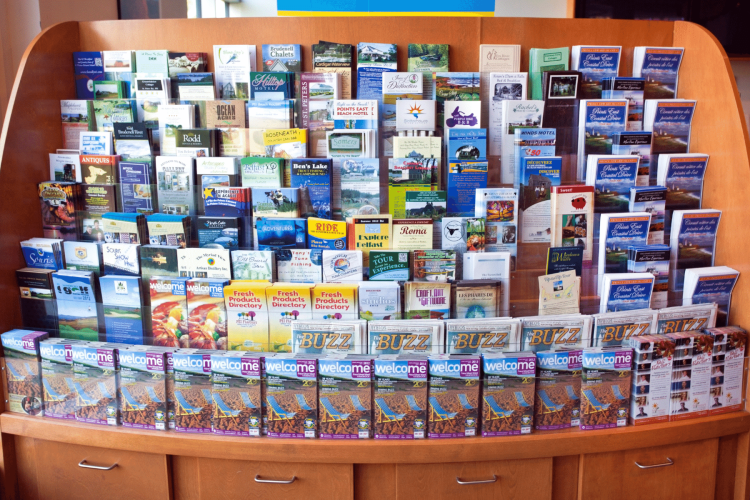
You definitely don’t want your tourism video feeling like the brochure wall in a hotel lobby.
visiting andWhat actually moves someone is specific. The real brewery owner who's a little awkward on camera but clearly loves the place. The actual texture of a Friday night downtown, not a staged recreation of one. A local telling you, honestly, what they'd tell a friend who was visiting for the first time.
That's part of why our documentary-style approach tends to work well for this kind of project. We're not casting actors to play excited tourists. We're finding the real people and real moments that make a place worth visiting, and building the video around what's actually there.
What This Looks Like in Practice
If you're a tourism board or DMO thinking about a video project, here's generally how we'd approach it:
We'd start by talking through who actually needs to sign off on this, so the process matches your organization's reality instead of a generic production timeline. We'd figure out everywhere this footage needs to live, website, social, trade shows, grant reporting, before we ever plan a shoot day. We'd look for the real people and real moments that make your destination specifically itself, not interchangeable with the town down the road. And we'd build in the right review points so the finished piece has buy-in before it's locked, not after.
Common Questions
Do you only work with destinations you've already visited or know well? No. We spend time upfront understanding what makes a place worth visiting, the same discovery work we'd do for any brand story. Having an existing relationship, like we do with Visit San Marcos, helps us move faster, but it's not a requirement.
Can one video shoot really produce content for a whole year? Often, yes, if it's planned that way from the start. The limiting factor is usually planning, not footage. A two-day shoot planned only for one finished video gets you one finished video. The same two days planned with distribution in mind can generate a full year of content across platforms.
How do you handle getting approval from a board or multiple stakeholders? We build review rounds around your actual approval process rather than a generic production schedule, and we try to get key stakeholders into the room during early creative conversations rather than only at final review. That's usually what prevents a finished video from stalling out before it ever gets used.
Thinking About a Destination Video?
If you're part of a tourism board, visitors bureau, or chamber of commerce in Texas and you're thinking about what a video project would actually look like for your organization, let's talk through it. We've been doing this long enough to know the stakeholder questions before you ask them.