Some of the best projects we work on aren't really about marketing a business. They're about helping someone build something that didn't exist yet.
That was the case with Treenet Collective.
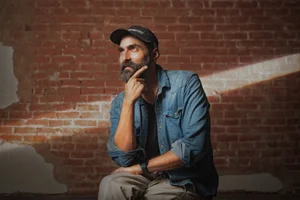
Kane and Lindsey run Treenet Collective, a studio that creates custom handwoven recreational structures from paracord, built for indoor and outdoor spaces. Their work is genuinely unusual to look at, and they'd built a large online following around it. They live and work out of a van with their dogs while traveling the globe for installations. Location was never really the point with this one.
An Introduction to the Mastering Treenet Basics Course →
All Skill, No Curriculum
Kane and Lindsey had a problem a lot of people would be happy to have. Their work was popular enough that they got a steady stream of inquiries from people who loved what they made, but a fully custom installation is expensive, and a lot of those people simply couldn't afford one.
They'd been kicking around an idea: what if people could learn to build a treenet themselves, at a much lower cost than hiring Treenet Collective outright?
The problem was turning that idea into something real. Kane and Lindsey knew how to build treenets extremely well. They did not know how to teach it in a structured way, and they were overwhelmed trying to figure out where to even start.
That became a big part of how we helped. We let them dump everything they knew out onto the table, then worked with them to collect, organize, clarify, and structure it into something another person could actually follow from start to finish.
We Started With a Script, Then We Dropped It
Our first instinct was a teleprompter.
Kane and Lindsey came prepared with scripts, especially for the more technical parts, like explaining the materials needed for a build. It became obvious pretty quickly that it wasn't working.
The more they tried to stick to the script, the more frustrated they got. They didn't feel like themselves. They sounded stiff, and they were worried their audience, people who already knew them from years of online content, would feel that stiffness too.
So we dropped it.
I told them we could do three takes, four, five, six, however many it took. They didn't need to deliver one perfect version in one pass. I'd build the clean version afterward, pulling the strongest pieces from each take. Once they stopped worrying about saying everything perfectly, they started sounding like Kane and Lindsey again.
The biggest shift in the whole project was realizing the script shouldn't be controlling the performance. The course got better the moment we prioritized them sounding like themselves over them hitting every scripted line.
Building in the Woods
Part of the challenge here was logistical, not creative.
To film the course, we needed four trees positioned in a cluster, close to a perfect square, strong enough and spaced correctly to anchor a treenet. We also needed permission to install there and reliable access to the same location around the clock for the length of the shoot. We handled finding and securing that location ourselves so Kane and Lindsey could focus on teaching instead of logistics.
One location with Kane, Lindsey, and our crew. Ten days of filming.
The Edit Had to Feel Like Them
An educational product can easily end up feeling like a textbook with video attached. We didn't want that.
Knowing Kane and Lindsey, their brand, and the audience they'd already built, I wanted the finished course to feel more like hanging out with them than sitting through a lesson. It needed to be genuinely educational and functional, but it also needed to move naturally. Relaxed, laid-back music. Pacing and visual choices that felt like Treenet Collective, not like generic course software.
I also wanted the course itself to feel handmade and crafted, the same way their actual work does. It shouldn't look like someone threw a few instructional videos online to make a quick buck. The educational product needed to feel like an extension of the thing they make with their hands.
An Audience Nobody Expected
We don't have exact sales figures to share, but Kane and Lindsey made their investment in the course back almost immediately, and the course continues to generate passive income. They already had a large, built-in audience waiting when it launched.
One of the more surprising results was discovering how international that audience actually was. There was real interest from places like Brazil and Spain, enough that we dubbed full Portuguese and Spanish versions of the course. Treenet Collective went on to sell it internationally.
One of the best parts has been watching a community grow around it. Treenet Collective started a Facebook group for students, and we've been able to watch people post progress photos as they build their own treenets in their own backyards, all over the world. Knowledge that used to live entirely in Kane and Lindsey's hands is now something strangers on another continent can learn and actually do.
"Working with Camera Clay was an absolute game changer for our business. We arrived for our shoot feeling more than a little nervous about being on camera, but Camera Clay quickly showed us they truly are a one-stop shop for getting it done right. They made us look and sound so much better than we felt, turning our unpolished takes into something incredibly professional. We are so happy with the outcome and we plan to work with them again and again in the future." Kane and Lindsey, Treenet Collective
One Project Became an Ongoing Relationship
This didn't end with one course.
In April 2026, about a year after the first course, we returned to produce their showcases, teaching people how to install these structures inside a home, across a loft or an opening, instead of outdoors between trees.
We also travel to document some of Treenet Collective's larger custom installations, projects that can take Kane and Lindsey a month or longer to build, through cinematic showcase films that capture the finished work and the spaces they create. It's become the other half of the relationship: online course video work that makes their skill accessible to anyone and showcase films that show what's possible when someone hires them to build the real thing.
One of those commissions was a custom net for Josh Brolin, and we documented the build. If you want to see what a Treenet Collective installation looks like when it's finished, you can watch the finished Josh Brolin net project. Films like this serve the opposite end of the business from the courses. A course is for the person who wants to learn to build one. A showcase film is for the person deciding whether to hire Kane and Lindsey to build the real thing.
Video didn't just market Treenet Collective. It helped them build an entirely new product and a new line of revenue that doesn't depend on spending a month physically building every single project themselves.
An Introduction to the DIY Indoor Treenet Course →
Common Questions About This Kind of Project
Do you only make courses for people who already have a big online following? No, though it helps. Kane and Lindsey had an audience ready for this course when it launched, which is part of why it found traction so quickly. But the harder, more universal problem we solved, turning expert knowledge into something teachable, applies whether you have ten thousand followers or none yet.
What if we know our subject well but have no idea how to structure a course? That's exactly the position Kane and Lindsey were in, and it's a normal one. We're used to being the person on set who doesn't already know the skill, which makes us a decent stand-in for the eventual student and a useful second set of eyes on what actually needs explaining.
Do you only work with people who want to film close to home? No. This project required finding and securing a very specific outdoor location for a multi-day shoot, and we also travel for Treenet Collective's installation documentation. If a shoot needs a specific place or environment, we'll help find it.
Can you help with multilingual or international versions of a course? Yes, in this case we were able to produce Spanish and Portuguese versions once we saw international interest. It's not something every project needs, but it's worth asking about if your audience reaches beyond English speakers.
If You're Sitting on Expertise You Don't Know How to Teach
Maybe you're not trying to make a marketing video at all. Maybe you have years of knowledge that lives in your hands and your head, and you're not sure how to turn it into something someone else could actually follow.
That's a different kind of project than a brand film or a case study, and it's one we genuinely enjoy. Tell us what you know how to do, and we'll help you figure out whether it's a course, a series, or something else entirely.